
Diamond as a heat-dissipating material
Thermal conductivity refers to how easily heat travels through a material. Diamond has a thermal conductivity of approximately 1,000 to 2,000 W/m·K—5 to 10 times higher than that of metals commonly used for heat dissipation, such as aluminum and copper—and is renowned in the natural world as the ”material that conducts heat the most." This is because diamond consists of carbon atoms firmly bonded by covalent bonds involving four valence electrons. Since heat is transmitted through lattice vibrations, this “strongly bonded lattice” facilitates efficient heat transfer.
In next-generation semiconductors and power devices, thermal management is critically important. Development is ongoing to utilize diamond’s excellent thermal conductivity and achieve maximum effectiveness.
As a heat-dissipating component
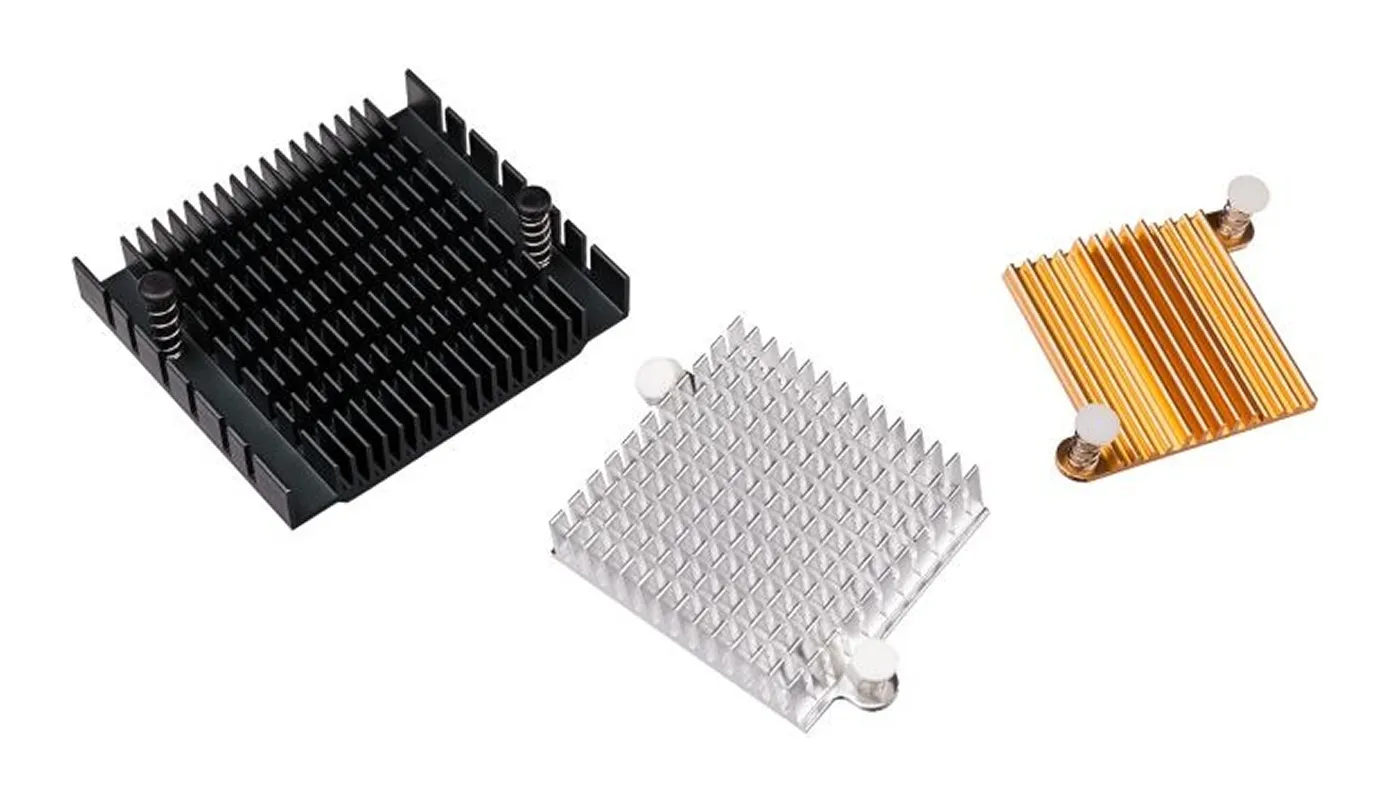
Electronic circuit boards and semiconductors generate heat during operation or when subjected to high voltages, so components are needed to cool them efficiently. Among these, the components installed in devices for the purpose of heat dissipation and heat removal are called heat sinks or heat spreaders.
Heat sinks require not only excellent thermal conductivity but also unique shapes, such as fin-type designs, to efficiently dissipate heat depending on the application. Currently, materials such as copper and aluminum are widely used.
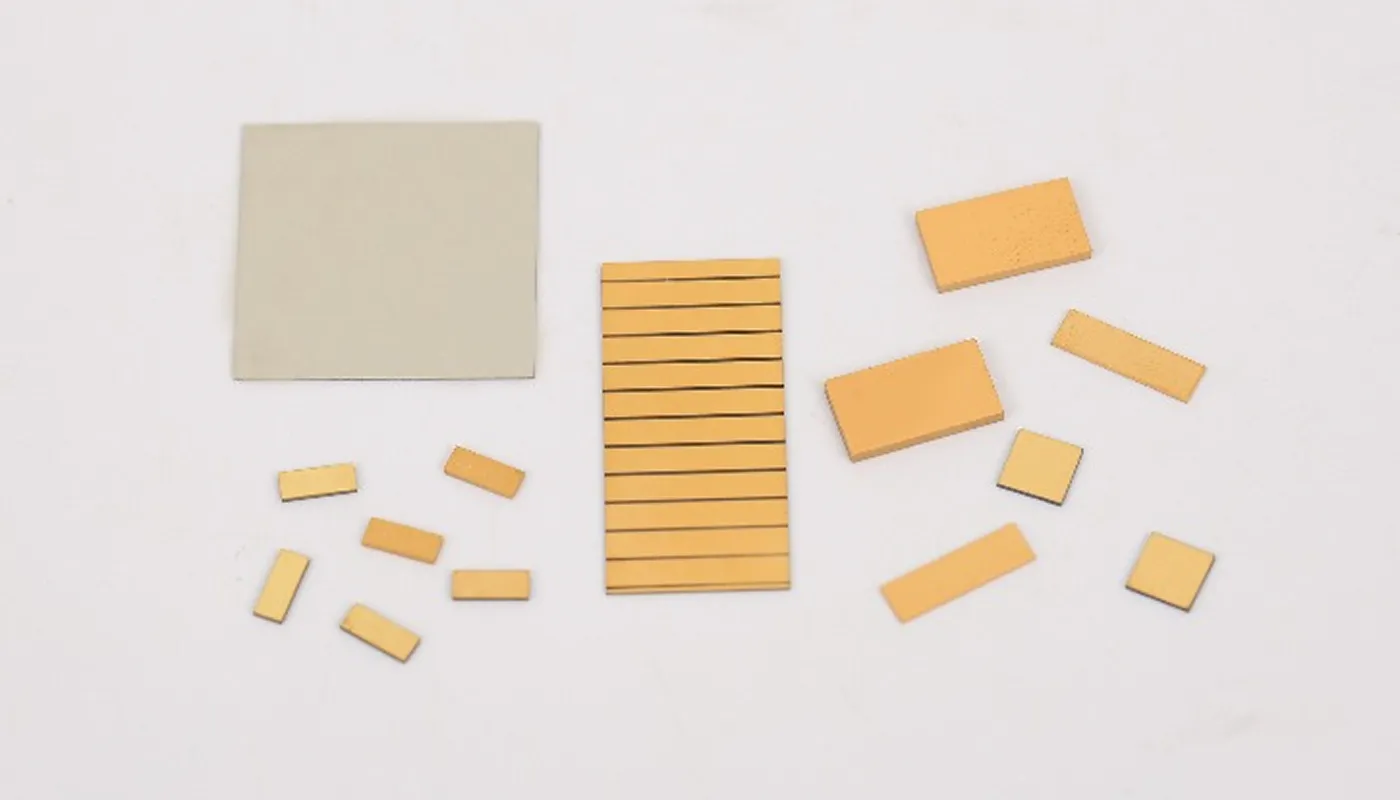
However, for next-generation electronic components aimed at higher efficiency and faster speeds, the adoption of diamond heat sinks, which possess even superior thermal conductivity, is currently being considered.
As thermal grease
The design that efficiently transfers and dissipates heat is known as thermal management. However, simply placing a heat sink on heat-generating electronic components such as semiconductors and blowing cooling air over them does not constitute effective thermal management; it is essential to ensure that the components are in close contact and integrated with one another. Thermal grease and thermal paste are paste-like materials used for this purpose. Currently, products are available that use silicone as the main raw material and incorporate various additives to enhance thermal conductivity, but they must meet the following requirements.
- Fluidity that conforms to uneven surfaces and the appropriate viscosity required for adhesion
- Capable of forming thin films
- Possesses insulating properties
- Does not degrade or deteriorate over time
With a focus on the thermal conductivity of diamonds, the development of products incorporating diamond powder is expected to advance;
controlling the particle size and shape of the diamond particles during formulation will be a key challenge for ensuring consistent quality.
Diamond as a semiconductor substrate
Semiconductors possess properties intermediate between those of conductors and insulators, and can conduct electricity under certain conditions.
Since they act as conductors, the energy required for electrons and holes to transition from the valence band to the conduction band is called the bandgap; this energy is high. In other words, materials with a large bandgap are well-suited for harsh environments involving high power, high temperatures, and high frequencies.
<Materials Used as Semiconductors and Their Band Gaps>
Si: 1.2 eV, SiC: 3.2 eV, GaN: 3.3 eV, Diamond: 5.5 eV
(eV = electronvolt)
Compared to conventional semiconductors such as silicon, those with a band gap of generally 3 eV or more are referred to as wide bandgap semiconductors.
Research and development is underway to utilize these materials as substrates for more efficient solutions—such as lightweight, high-power designs—in the development of clean mass transportation (railways, aircraft, and ships) aimed at mitigating global warming. Diamond, in particular, is highly anticipated as a power device for the next generation and beyond.
About Global Diamond
 Evaluation and Recommendations for Your Current Abrasive Grains
- Support for Special Mesh Sizes
- Precision Coarse-Grain Cutting
We also offer contract analysis services
Consultations and Inquiries
Other Technical Information
-
Mesh Size Chart

-
Micron Designations and Particle Size Standards
-
How Laser Diffraction Particle Size Analysis Works
-
Method for Measuring Abrasive Grain Strength (TI/TTI)
-
(M)SDS
-
How Synthetic Diamonds Are Made
-
When Selecting Superabrasives
-
Diamond as a heat-dissipating material
-
What Are Industrial Diamonds?
-
What are abrasive grains?
-
What is CBN?