
How Laser Diffraction Particle Size Analysis Works
Laser diffraction is a widely used particle size measurement technique for determining particle sizes in the micron range. The reasons for this are as follows.
POINT1
POINT2
POINT3
POINT4
POINT5
POINT6
POINT7
Measurement Principle
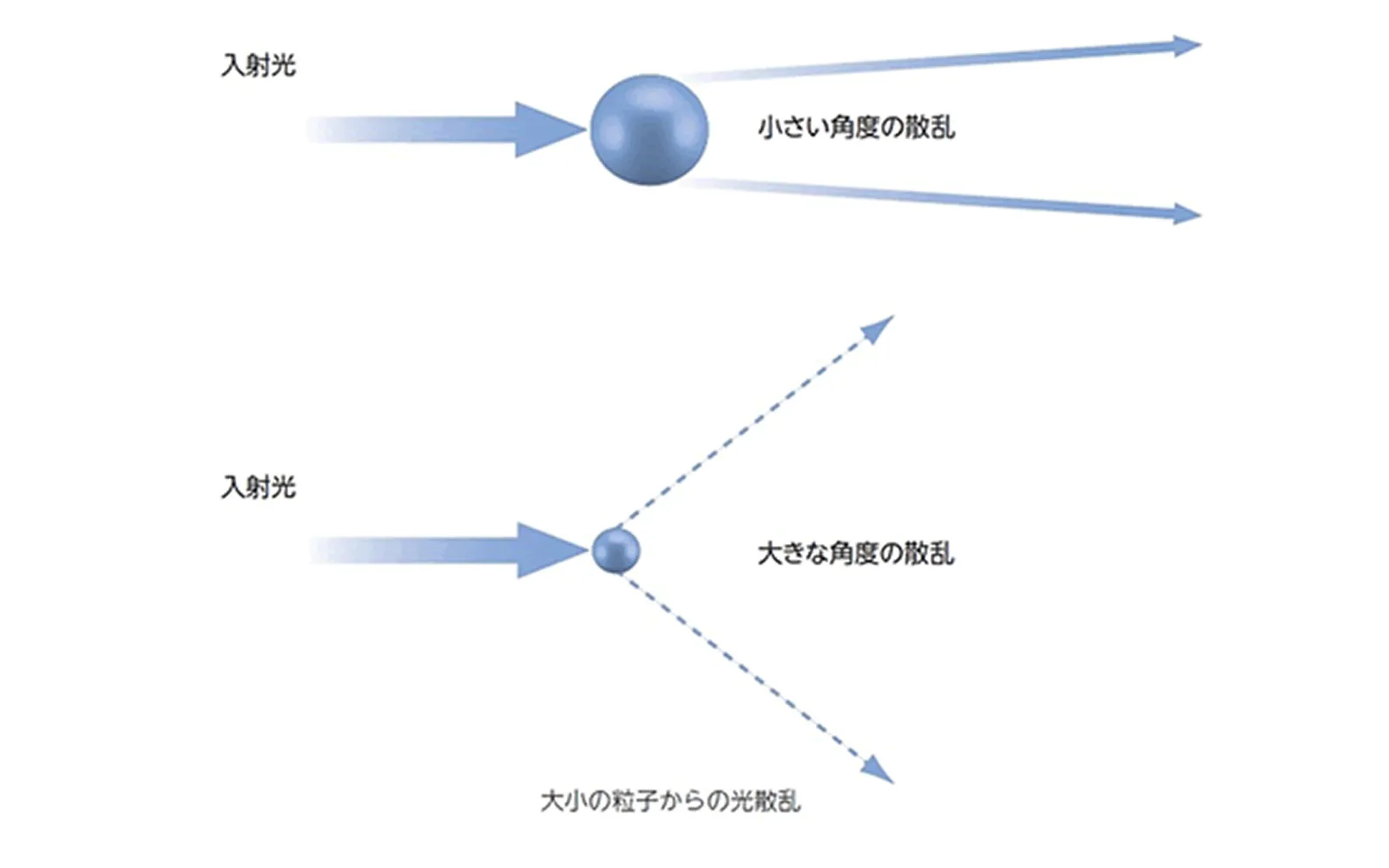
In laser diffraction, the particle size distribution is determined by measuring the angular dependence of the intensity of light scattered as a laser beam passes through a sample of dispersed particles.
As shown in the figure below, for larger particles, light is scattered at small angles relative to the laser beam, whereas for smaller particles, light is scattered at nearly the same intensity up to large angles. The data for each angle is then analyzed, and the particle size responsible for the scattering pattern is calculated using Mie theory of light scattering. The particle size is reported as the diameter of the equivalent volume sphere.
Optical Properties
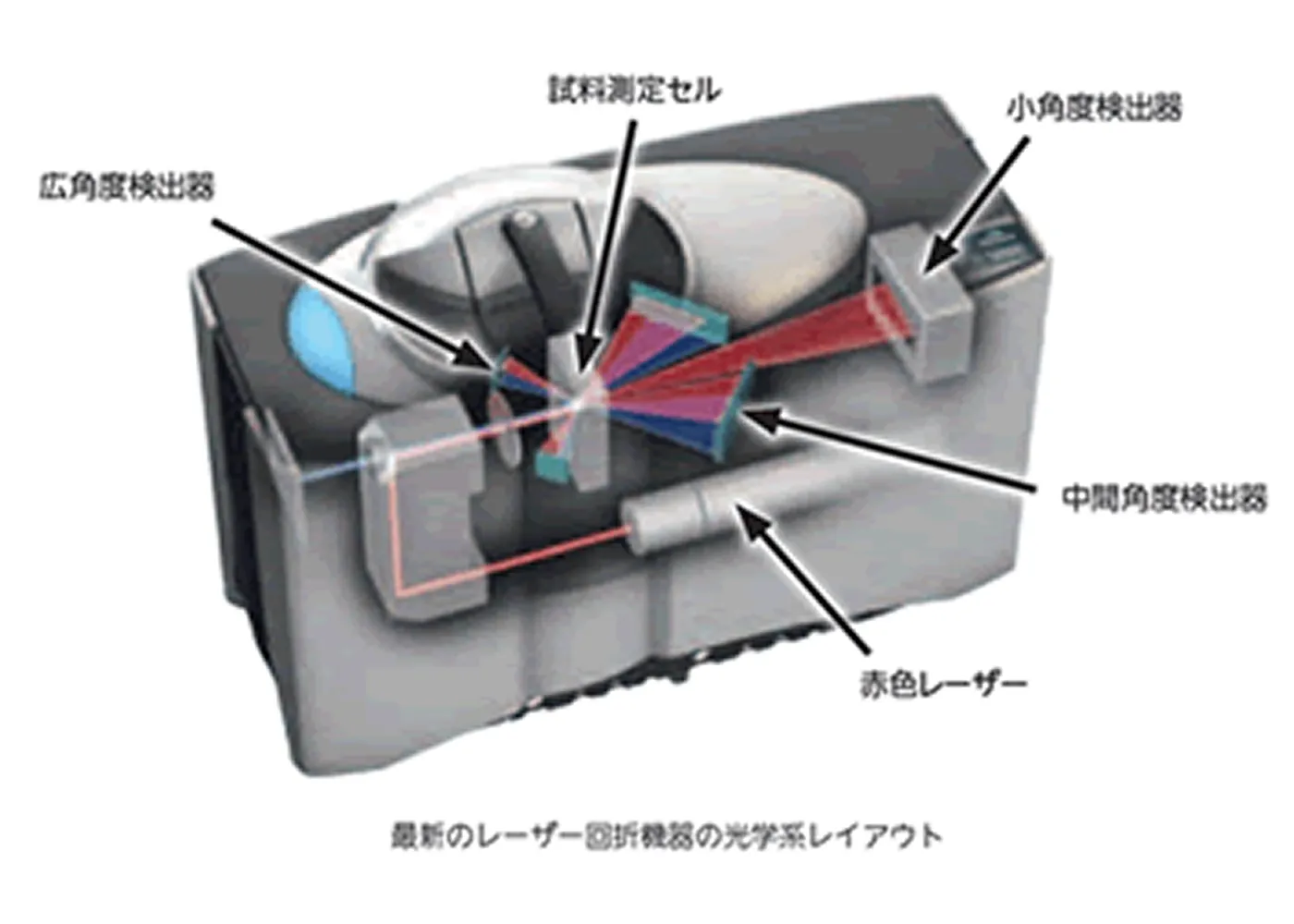
A typical laser diffraction system consists of three main components.
Optical bench
Sample Dispersion Unit
Measurement Instrument Software
Considerations for Laser Diffraction Measurements
- Since the particle size distribution is determined by comparing the scattered light intensity with theoretical values based on a spherical model, the results may not correlate well with other measurement methods (such as particle size measurement via image analysis) or with laser diffraction analyzers from other manufacturers.
- The accuracy of peak separation is not as high as that achieved by microscopic methods.
- The data may vary depending on the choice of refractive index used in the calculations.
Furthermore, when agglomerated abrasive particles are present, the results can vary significantly depending on the dispersion state of the sample, which is influenced by the conditions of the dispersion system (pump type, flow velocity, flow rate, type of ultrasonic irradiation device, and output). Therefore, it is important to always perform measurements using the same equipment and under the same conditions, as this improves reproducibility.
For this reason, it is essential to compare values under strictly defined measurement conditions.
Source:Source: Spectris Corporation, Malvern Panalytical DivisionOpens in a new window
About Global Diamond
 Evaluation and Recommendations for Your Current Abrasive Grains
- Support for Special Mesh Sizes
- Precision Coarse-Grain Cutting
We also offer contract analysis services
Consultations and Inquiries
Other Technical Information
-
Mesh Size Chart

-
Micron Designations and Particle Size Standards
-
How Laser Diffraction Particle Size Analysis Works
-
Method for Measuring Abrasive Grain Strength (TI/TTI)
-
(M)SDS
-
How Synthetic Diamonds Are Made
-
When Selecting Superabrasives
-
Diamond as a heat-dissipating material
-
What Are Industrial Diamonds?
-
What are abrasive grains?
-
What is CBN?